Bridging worlds

A report written by Giuseppe Dante Tamborrino:

Never would I have imagined that one day I would play electronic music live, as an orchestral instrument, in a classical chamber opera, with a choir; they are two worlds, and yet, here I am.
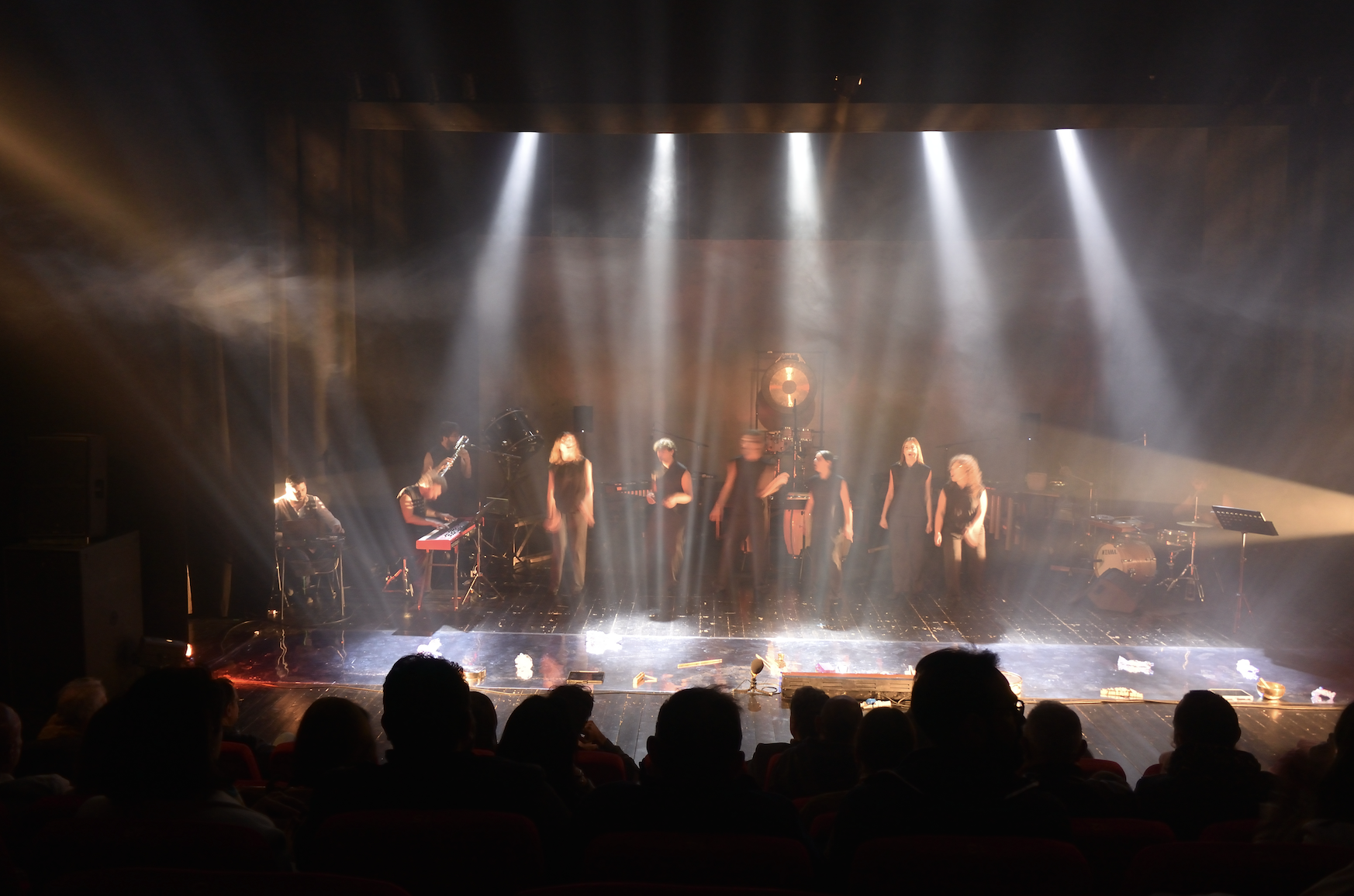
World premiere of “La Follia Delle Folle,” opera commissioned by Human Ensemble with music by Giovanni Tamborrino and lighting by Michelangelo Campanale.

First, some background. I come from a family of percussionists and composers, each with his own ideas and musical styles. It’s not always easy to agree on musical choices. But recently, my father composed two new works, one for a small percussion group and another for orchestra and choir. And, somewhat unexpectedly, he invited me to become part of the ensemble, reminding me that events, shows and concerts, are born freely, from experimentation. He gave me one directive: “Explore!”

I knew the first event had a semi-graphical score which would allow me the latitude to employ a personal sonic language based on recycled percussions, vases, etc. But I was still struggling with finding a way to sonically bridge the two worlds: traditional chamber opera and my improvisatory world of live electronics.

First Rehearsal

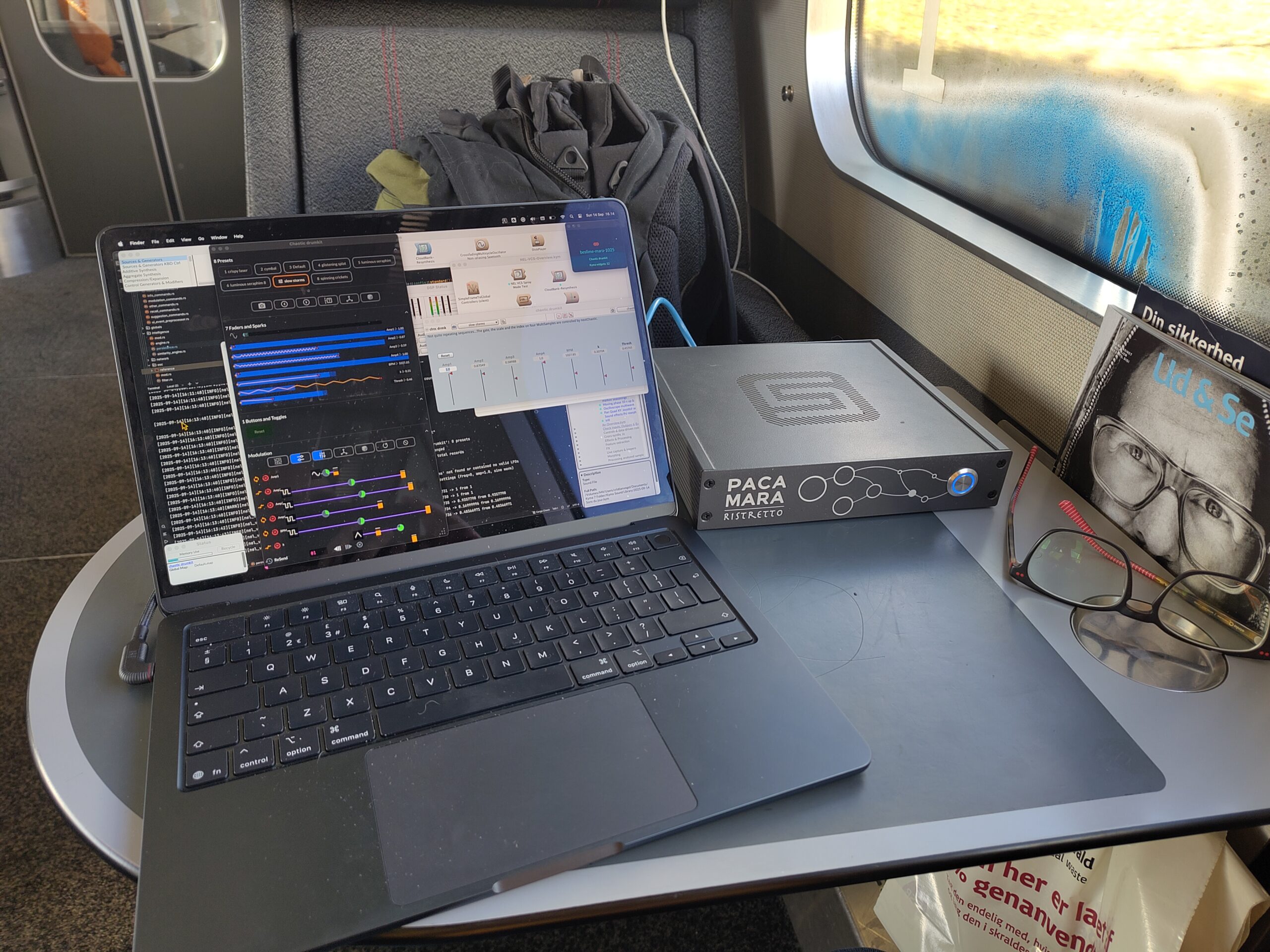
I took my Pacamara to the first test and set up the live electronics on the same day: two battery and bluetooth speakers, a small sound card with 2 input channels and 4 output channels (2 channels in headphones and 2 channels at the speakers, so I could preview the experimental constructions based above on the microphone input, treated by the sound synthesis in Kyma). My goal was to blend Kyma with the timbres, rhythms, and the acoustic sound density of the instruments, trying to respect the roles of the other instruments, so as not to cover them, alternating reiterations of the existing sound with spectral treatments; pitch shift, delay, vocoder and manual modulation of the window size.

At one point during rehearsals, my father (who was conducting) suddenly looked up and said to the musicians, “Yes! That’s the sound I’m looking for!” To which the musicians replied, “That’s not us—that’s your son!” The sound quality of the electronics was so good and so seamlessly blended that it could be confused with the original acoustic instruments; during the performance it was not clear which magical instrument was playing. At that moment, the ‘two worlds’ I feared were irreconcilable had suddenly become one.

Day 1

The world premiere of La Follia Delle Folle, an opera commissioned by Human Ensemble with music by Giovanni Tamborrino and lighting by Michelangelo Campanale took place on 23 April 2026 at the Ruvo Municipal Theater in the province of Bari. This experimental work explores the intersection of media and social provocation and is intended to shine a light on several episodes that have marked our time. It was part of the four-day ESSERE festival put on by Human Ensemble to create an inclusive, participatory space where art, music, and ideas intertwine.

La Follia Delle Folle is a work for contemporary ensembles: percussion, vocals, bass flute, electronic keyboards and sound objects: plastic bottles, vases, marble slabs, small bells and more. The entire concert is based on a contemporary score with a musical and narrative design comprising micro and macro events in which jazz and fusion influence small events—(micro) rhythms and melodies—that combine into (macro) structures, navigating various genres and styles, from the classic to the more accessible styles, all ultimately transformed through electronics.
The electronic instrumentation was based on feedback and MemoryWriters, to establish a melodic and rhythmic connection. I divided the instrumentation for live electronics into two parts to impart more energy and variation throughout:

Texturing Instruments for slow parts from 68 to 112 bpm, based on granular synthesis with slow buffer reading, pitch shift for octaves and fifths, reiterated by the captured signal Mic → evolved → sent with my speakers and back. A kind of feedback synthesis to contribute to the final acoustic body to the depth of the melodic and slow parts.

Rhythm Instruments for fast and rhythmic parts from 112 to 178 bpm; strong delays with pitch shift and scratching with variable size of the table by adding accelerations and decelerations of the sound stored with recursive input, to the density of the rhythms with percussions and orchestra.

In this Rhythmic section I also used a small box with a piezo, springs and a small rope, to send very short and clear sounds to the Pacamara, easily perceivable and rhythmic impulses into the evolving sound. This allowed me to clean and reduce the sound mass in very dense areas and to avoid covering fundamental rhythms in the score.

Lights and scenography contributed to the listening immersion and enhanced the meaning of the performance.

Power On
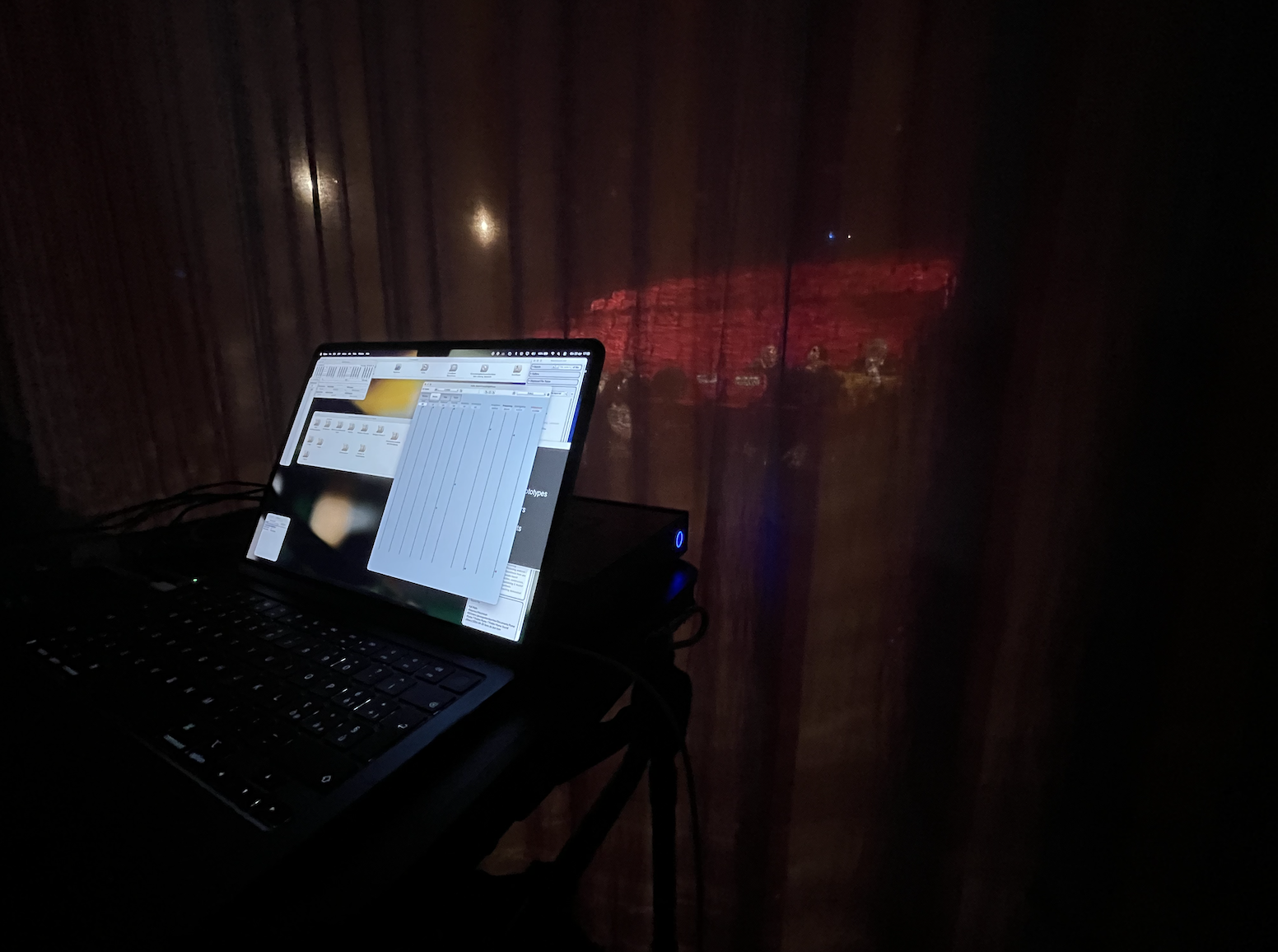
At Power On, for the first time in my life, I felt a sense of computer security and stability, which totally erased the sense of panic I’d always experienced before each of my pre-Kyma concerts.


Day 2

ShalomPaxSalam, the chamber opera by Giovanni Tamborrino with libretto by Enzo Quarto, had its world premiere at Bari’s Teatro Piccinni, featuring the Orchestra Filarmonica Pugliese. The title ShalomPaxSalam communicates the “three worlds” of the Abrahamic faiths coming together through the shared word for “Peace” and explores the theme of interfaith unity and the reconciliation of conflict—a message that feels particularly urgent in our times. (News article and Poster)

World Premiere of ‘ShalomPaxSalam’ a chamber opera by Giovanni Tamborrino with libretto by Enzo Quarto, featuring the Orchestra Filarmonica Pugliese at Teatro Piccinni, Bari.

I wanted to expand the musical sound possibilities, looking for a connection between the sound of the orchestra and a soundscape of natural events described in the text that deals with the land of Canaan and other places, to better communicate the narrative of the opera. In this work in fact, I dealt more with sound design, using simple generators of filtered white and pink noise to create a kind of performable ‘synthetic sea’—a controllable, perceiveable instrument superimposed over a great orchestral sound density.

Following a similar approach to the day before, I divided my contributions—though they were less prominent this time—into two sections: slow and fast. For the slow parts I used tools, such as recursive samplers with loopback, to automatically attenuate loud signals to emphasize the softer signals. This created a threshold within the orchestral space, where I used spatial movement and spectral recurrences to ‘read’ the incoming audio at an extremely slow rate. By re-processing the accumulated acoustic signal—varying from zero to four seconds of captured sound—I was able to generate complex morphologies and refractions of the orchestra’s own voice.

For the fast parts I used vocoders and pitch shifters together with my small box of recycled instruments taken from the piezo, looking for background effects and thin sounds, as metaphors for insects and sand, to accompany staccato sounds of flutes and percussion.

The entire performance was the result of a magnificent orchestral performance of the Orchestra Filarmonica Pugliese which alternated moments of classical and sacred music with moments of electronic music to combine past and present in a single work.
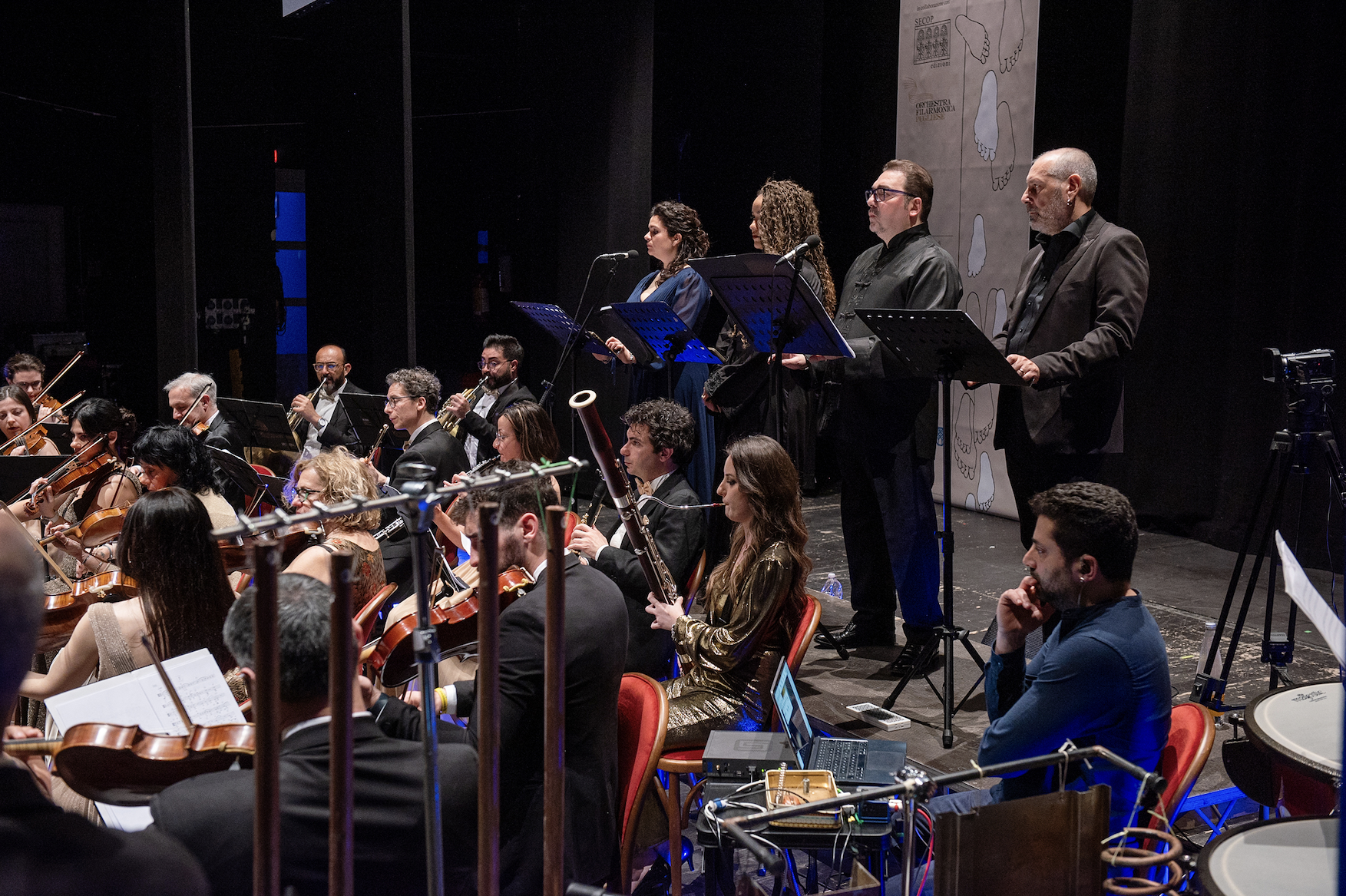
Giuseppe Tamborrino (laptop and Pacamara) with Orchestra Filarmonica Pugliese at the world premiere of ‘ShalomPaxSalam’ at Teatro Piccinni, Bari. Photo by Giuseppe Tricarico.

Live streaming concert with Kyma electronics

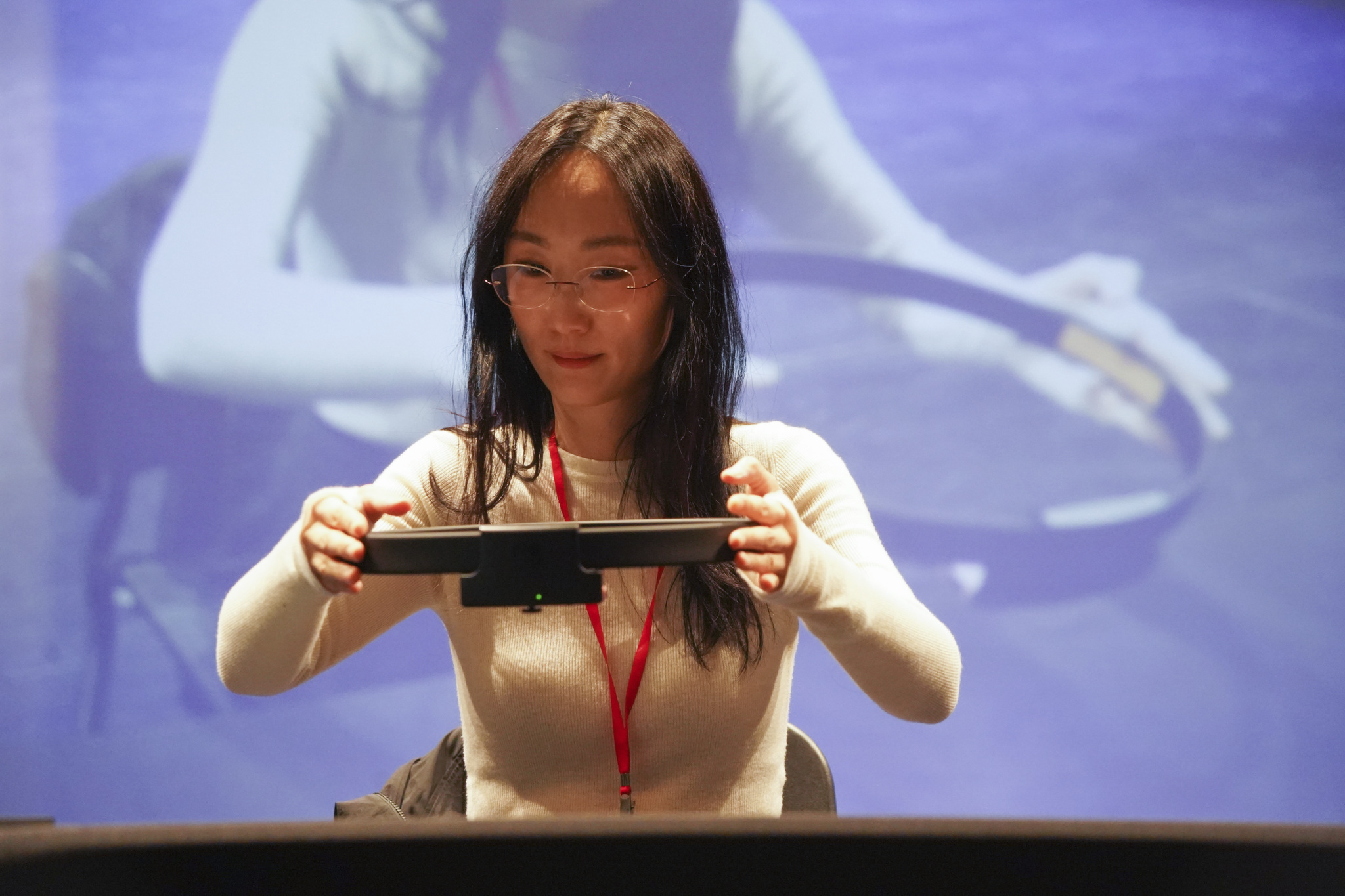
Haverford College Department of Music presents a faculty recital by composer and performer Mei-ling Lee, with Keenan Zack (double bass) and Arta Jekabsone (voice).

This program explores where human experience, sound, and technology meet, transforming memory, voice, and movement into immersive sonic landscapes through data-driven instruments and live electronics. Rooted in myth, storytelling, loss, and longing, these works reflect on how technology can carry our stories and give voice to the unseen and unspoken.

HAVERFORD COLLEGE—MICHAEL JAHARIS RECITAL HALL
Friday, 20 March 2026 | 7:00 pm
FREE AND OPEN TO THE PUBLIC
Live stream link: hav.to/rzc

Tormento and Depeche Mode M

Sound designer Javier Umpierrez has two sound-intensive films coming out this month and next.

Olallo Rubio’s Tormento stars Natalia Solián as an exhausted security guard with some guilty secrets on her first day on the job covering the graveyard shift at the morgue — what could go wrong?

Umpierrez’ sound design for the Tormento trailer is terrifying! He builds and builds and builds to a climax when it suddenly goes silent! Followed by a strangely disembodied closeup of Solián’s scream. Opens on 13 November 2025 only in cinemas.

Javier writes:

Tormento doesn’t have a lot of dialogue, so I had a lot of space to have fun with sound design. There are a lot of dissonant and tonal sounds, practically a score, and all the sounds were generated with Kyma. So fun to work with Kyma like this, a lot of density and grit , the director is beyond happy with the results.

In his trailer for Depeche Mode M, Umpierriez captures the insane excitement of a live DM show, the sounds of the massive crowd, and the music. Reach out, touch me! Dance is the cure.

Directed by Fernando Frías, the film captures Depeche Mode’s 2023 Memento Mori tour and the three sold-out shows in Mexico City attended by over 200,000 fans. DEPECHE MODE: M delves into the profound connections between music, pain, memory, joy, and dance.

Limited screenings begin on 28 October 2025 in cinemas and IMAX.


Refractions on a complex system

In recent months, composer Giuseppe Tamborrino has been using Kyma for a sonic exploration of feedback on recycled percussion instruments. When he started connecting these instruments to each other, he discovered a complex physical system that significantly increased their timbral capabilities.


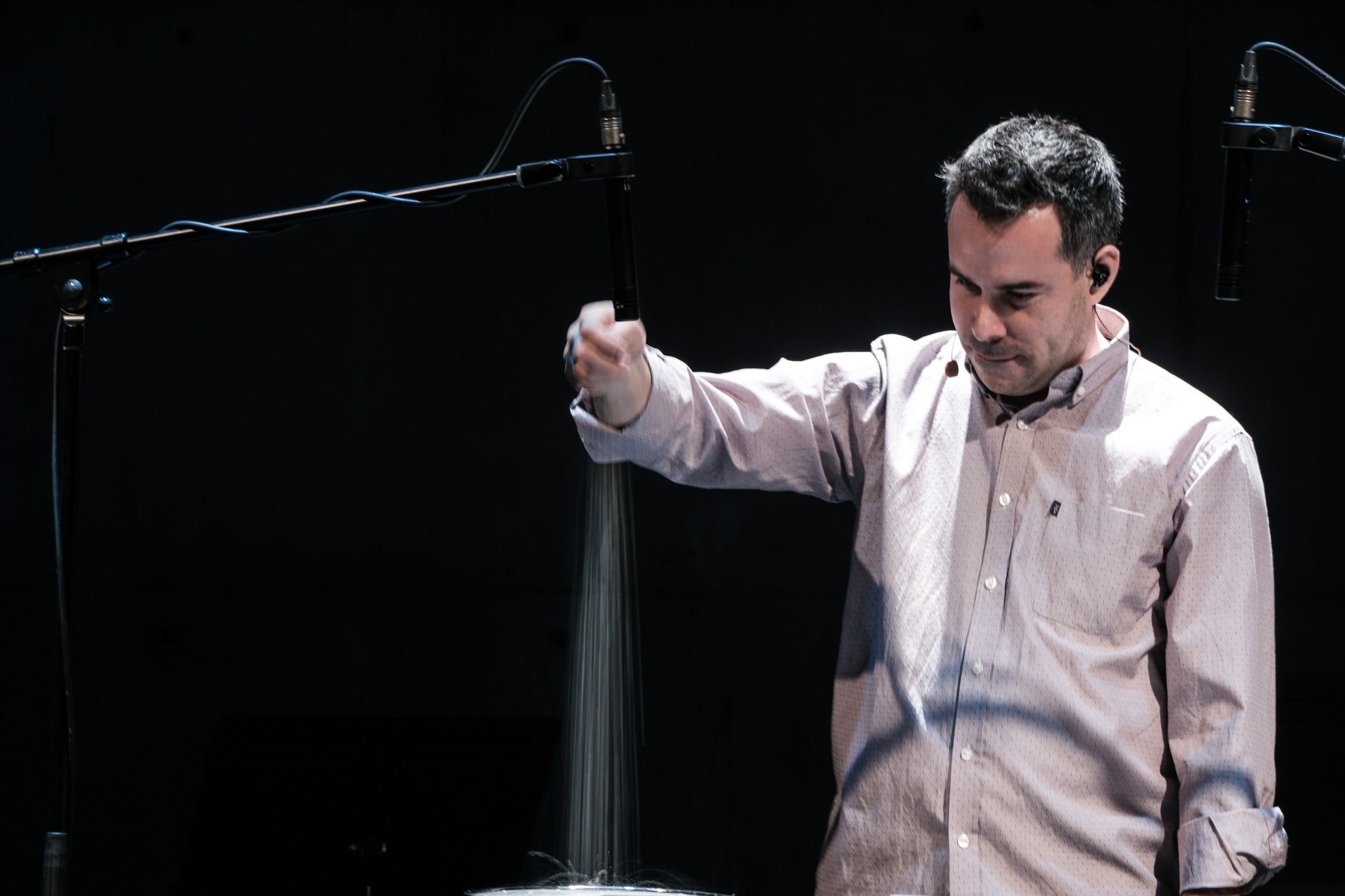
Following the research of Agostino Di Scipio and his “acus-mate” concept — in which speakers become instruments — Tamborrino employed four Bluetooth 5.0 speakers as both instruments and drumsticks. This allowed him to send low-frequency sounds through a portable quadraphonic system in Kyma.
Continue reading “Refractions on a complex system”

A Parábola

Carlos Alberto Augusto’s A Parábola (The Parable) is a cycle of pieces for instrument(s), a pre-recorded track, and the musician/actor’s spoken voice.

Augusto has produced four pieces of the cycle thus far: Akinesis for viola (2001); The Moment of Being (O momento de ser) for marimba, glockenspiel and small percussion (2007); A observação do Tempo (Observing Time) for snare drums (2023); and a new piece, for classical and baroque guitars, and small percussion, is about to premier.

Andrés Pérez performing performing Carlos Alberto Augusto’s A observação do Tempo

Continue reading “A Parábola”

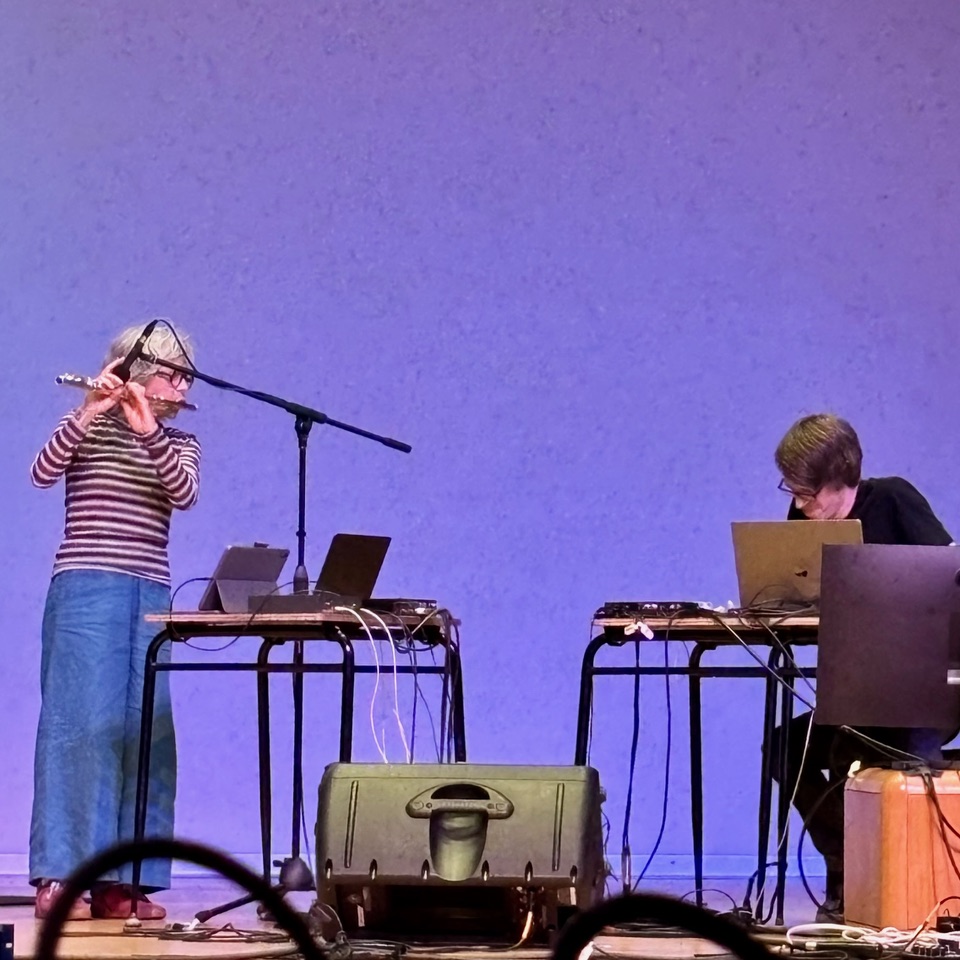
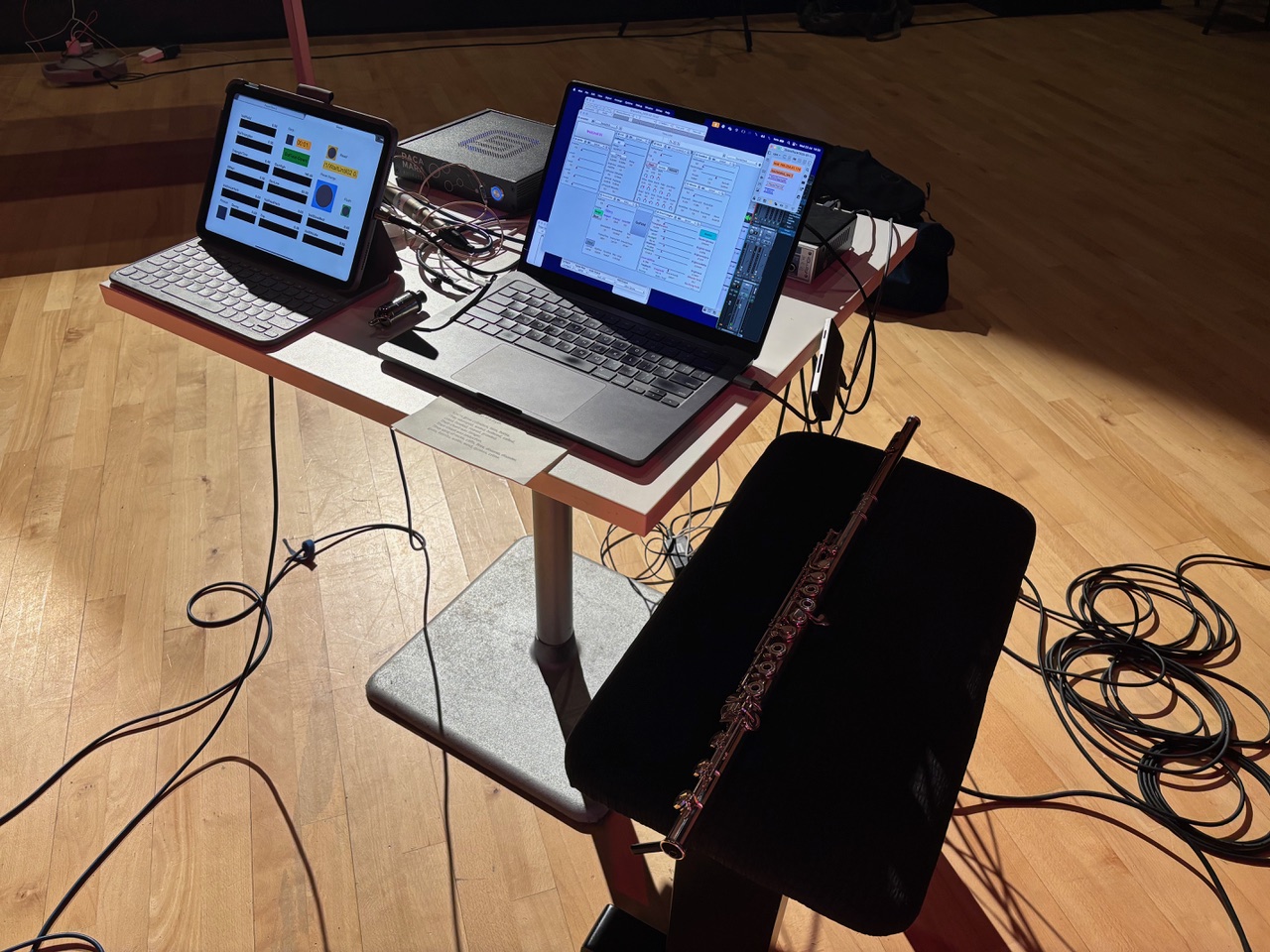
Anne La Berge live Kyma electronics

Composer/performer Anne La Berge was the featured artist for the 2025 SPLICE Institute — an annual Institute designed for performers and composers to study the integration of performance with electronics where she presented several performances, worked with student composers, and was invited to do an introductory session on how she uses Kyma in her work.

During the conference, she became a role model for students seeking artistic careers outside of academia.

Earlier in the summer, she was featured in the Cortona Sessions for New Music (20 July – 1 August, 2025 in Ede, Netherlands) — an educational program dedicated to the creation and performance of contemporary music, and a meeting place for emerging composers and performers seeking to collaborate, learn, grow, and create.

Should I stay or should I go?

It’s a question at the top of everyone’s mind recently: When your current situation feels broken, should you stay and try to fix it? Or should you go somewhere else and start fresh?

We interviewed two Kyma artists — Andrea Young, professor of composition at University of Auckland in New Zealand. And Franz Danksagmüller, professor at the Musikhochschule Lübeck (MHL) in Germany and visiting professor at the Royal Academy of Music in London.

Recently, Franz and Andrea were each (independently) recruited to join the faculty of a different university in another country. After much consideration, Franz chose to stay in his current position, and Andrea chose to travel halfway around the world to accept a new position. What factors entered into their decisions? In the interests of anonymity, let’s refer to the two options as the Stay option and the Go option.

Continue reading “Should I stay or should I go?”

Light Time Delay

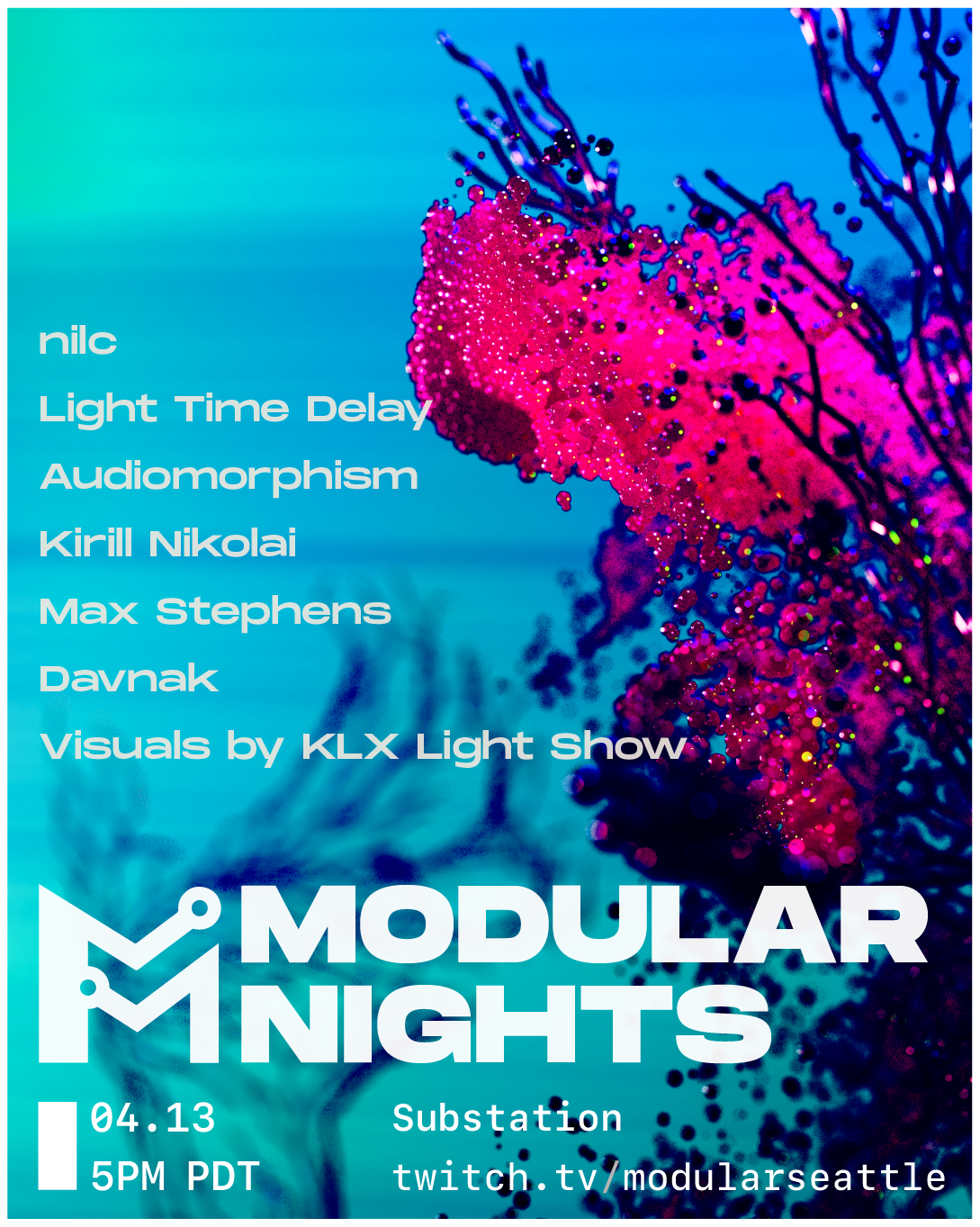
“Light Time Delay” is a term-of-art used to express the comms delay between the earth and spacecraft. It’s also the stage name for Kyma artist Théa-Martine Gauthier’s live performance project, recently featured on Modular Seattle’s Modular Nights 13 April 2025, a free monthly event at the Substation venue in Seattle’s Ballard neighborhood.

Opening with phasey delays and a rumbling sub, evocative of acceleration, the performance explodes into metallic rhythmic analog chirps paired with images evoking navigation, PC board layouts, and gravitational manifolds. Obsessively accelerating loops and fragments of texts close in on us in ever-accelerating spirals until the tension finally resolves into a watery, peaceful texture with floaty vocals, underlaid by ominous sub rumbling, electric frog creaks, and shimmery ringing filter chords over a deep thrumming fundamental, and concluding with a sense of wonder and reflection on the improbability of this experience we call “life”:
Continue reading “Light Time Delay”

Chi Wang featured artist at TURNUP

Composer/instrument designer, Chi Wang, was the featured guest artist at this year’s TURNUP Festival in Tucson Arizona on 21 March 2025.

After performing two of her compositions—Transparent Affordance and Fusion of Horizons — Professor Wang presented a public lecture about her work, including sound design demonstrations and live performance excerpts in Kyma.

Dr Wang’s graduate student Minho Kang also appeared on the festival program with The Mist, a fixed media piece where Kyma was used for sound design.